Sunday, 16 February 2014

Museo Sorolla Madrid

While in Madrid last week to speak at the European Regional Airports conference I visited the Museo Sorolla, a major cultural attraction of the city, on the recommendation of my pal Charlie Jamieson, one of Scotland's leading painters and a man who recognises a great fellow "colourist" when he sees one.


An outstanding example of a "house museum" the Museo Sorolla in Madrid has preserved the atmosphere of what it was like when its celebrated occupant, Joaquin Sorolla Bastida, lived there in the early twentieth century. The artist's studio, illustrated above and below, is a very large space, full of light with an airy feeling about it even although its walls are now full of the artist's work, examples of which are shown below.


Born in Valencia in 1863, Sorolla became known in Spain as the quintessential painter of Spanish peasant dress and customs at a time when traditional dress was dying out and as a painter of life at the sea side and portraits of intimate natural family life. His work has been compared to that of Sir John Singer Sargeant and he himself recorded how much he had been influenced by the painting style of Velasquez and the Scandinavian painters "en plein air", Zorn and Kroyer. He was particularly inspired by the Valencian coastal landscape and by the landscapes of the Spanish interior, for example, around Toldeo. 


All the while he developed a very distinctive style of portraiture, often using his wife and children as his models. Latterly, towards the end of his life, he developed this style through his portraits of Spanish peasants in their traditional dress, as shown below.


For me this museum was a joy to discover and a wonderful addition to my knowledge of Madrid's cultural attractions, offering a contrast to the more formal paintings found in the Prado. I recommend you to visit it the next time you are in Madrid.. 


The Benefits of City and Regional Destination Branding - Attracting People, Investment and Airlines

Terminal 4 Madrid Barajas Airport

On Thursday 13 February I gave a presentation on this subject to the annual European Regional Airports conference in Madrid. The theme of the conference was "The Economic Impact of Airports" and, after a general scene setting by Lea Bodossian, Secretary General of the Conference, on the importance of airports to city and economic development, discussion focussed on (1) the impact of airports and (2) what cities and airports can do for airlines. 

Of most interest to me were the presentations by (1) Jean-Francois Benon, the Director of the Val d'Oise Development Agency in France on the role of Paris Charles De Gaul Airport in that agency's development strategy and, (2) Elena Mayoral Corcucuera, Director General, Madrid Barajas Airport, on the initiatives her airport is taking to integrate its development with regional development initiatives.

The brief given to me by Lea for my presentation was to stress the importance of destination branding for cities and their regions and to explore how their airports might play a key role in the development of such strategies. What follows below is a synopsis of the key points I made in my presentation.

I opened by stressing the important role that cities and their regions play in driving economic growth and that it is that growth that needs to be captured in destination branding strategies.

I then explored why brand strategy is important for the development of city regions. In summary, my argument is that they need to (1) differentiate themselves, (2) develop a recognisable identity, (3) understand that they are in competition with many other cities and regions around the world - principally for human talent, investment, tourists and visitors, and (4) take action to retain their existing people, businesses and institutions.

Then I focussed on why airports should be involved in city region brand strategy. Airports are a major driver of local economic development in terms of job generation, workforce expenditure, investment in direct business services connected with their operations and indirectly in terms of tourist and business visitors expenditure. They also have a little recognised but important role to play in that they are, like rail termini, a "brand gateway" - a place where visitors get a first "taste" of the brand offer in action and up to date information on its offer to reinforce any pre-trip research they may have undertaken. 

Airports, particularly hub airports, can showcase major elements of the city's offer, a good example being the exhibitions at Amsterdam Schipol on the offer of the Rijks Museum.


The Riks Museum "taster" exhibition at Amsterdam Schipol Airport

Airport terminals can also play a role in promoting the entertainment and commercial offers of their city. For passengers awaiting flights they can entertain them with performance excerpts from theatre, musical and dance productions currently playing in the city.  

They can also act as a showcase for the major commercial brands that the city gave birth to, for example fashion and food brands - either through exhibitions of their product range (in pop-up spaces) or actual retail outlets where the city brands can sell their product range.

Given that most of the airports represented at the conference possessed little knowledge on what's involved in city and region branding I summarised it as follows:

  • Its not about the design of logos or the composition of tag lines
  • It's being strategic about being competitive
  • It's about the place identifying it's distinctive offers and experiences
  • It's about levering their assets, attributes and attractions
  • It's being clear on their target audiences
  • It's about their ability to attract and retain human talent, investment and businesses
  • It requires an understanding of key international city competitiveness factors and how the ratings agencies compile their statistics on city and region economic performance
  • It involves their levering the attractiveness of their heritage and cultural assets, higher education institutions and research and development organisations
  • It involves them developing and maintaining the city as a quality living environment

Cities and regions which have developed powerful destination brand strategies:

  • Have clarity on the market audiences for their different assets and attractions
  • Develop powerful tailored messages for individual audiences on their offers and experiences
  • Tell their target audiences compelling and powerful stories about their offer and about who is already operating successfully there
  • Assemble brand propositions of value for each of their target audiences
  • Clearly communicate how those propositions can be accessed and delivered
  • Are consistent in their messaging with all stakeholders singing from the same hymn sheet
  • Recognise that you cannot tell everyone, everywhere, everything about your offer all of the time

Cork and Kerry Mountains

To illustrate these points I presented a case study on the initiative being taken in Ireland to develop a destination brand for the Cork Region in the south west of the island. This initiative is being led by Cork City Council and Cork County Council with the active involvement of a number of key stakeholders including Cork Airport, the Port of Cork, Cork Chamber of Commerce, University College Cork, the Cork Institute of Technology and Failte Ireland, the Irish tourism development body.

The impetus for this initiative came from a recognition by a number of these stakeholders that the existing marketing of the Cork region offer and experience was confusing, uncoordinated and lacking a common focus - principally agreement on what constituted the region's destination brand and a focussed brand proposition.

To remedy this and develop a destination brand proposition and a strategic marketing plan to promote it the stakeholders appointed Colliers Ireland (Dublin), Placematters and Fuzion PR (Cork and Dublin). Our work programme consisted of:
  • Assessment of current marketing and messaging about the region
  • Identification of the region's  assets, attributes, attractions and ambitions
  • Development of a brand proposition 
  • Market testing of the brand proposition 
  • Brand refinement following testing
  • Brand briefing for key stakeholders on the agreed proposition
  • Advice on brand management and implementation
Considerable progress has been made and the agreed initial brand proposition is about to be tested in a number of target markets over the coming months.

A copy of my slide presentation can be downloaded from the home page of my web site at www.placematters.co

Further information on the Airports Regions conference can be found at www.airport regions.org


Friday, 17 January 2014

The Georgians Revealed


I've just been to see "The Georgians Revealed Exhibition" at the British Library in London - www.bl.uk/georgians-revealed which runs until mid-March.

I first became aware of the Georgian's through their architecture when I was an undergraduate town planning student and have learned more about them over the years from literature (Jane Austen to Patrick O'Brien, Dan Leno, Fanny Burney and Beau Brummel), film (the Madness of King George), TV (Flashman) and visits to Bath, the Brighton Pavilion, the New Town in Edinburgh and histories and novels of the Napoleonic wars. 

Even so I was not expecting to discover so much more about the ordinary, OK mainly middle class, people of the Georgian period as was on display in this great exhibition. It really brought home to me how places and developments reflect and are a reflection of the impact of war, peace, the development of trade, manufactures and products, changers in consumer tastes and behaviours. It is town planning and urban development brought to life through the perspective of the people who designed and built Georgian towns and cities, the grand mansions of the aristocracy and the speculative developments of squares and multiple occupation buildings; through the design, manufacture and use of a host of products that made living more comfortable for those with the means to afford them; through the growing awareness among some of the well to do of the rise of poverty and the need for private if not public care to alleviate it (the Foundlings Hospital at Coram Fields in London for example); and through the growth of a consumer society and the introduction of new types of shops to serve it, for example early interior decoration materials and furniture suppliers.

And the exhibition catalogue is a treasure chest of detailed information on urban development, place making and biography of the movers, shakers, innovators, gossips, rakes, criminals and creatives of the period; well worth the purchase price of £20.00.

Go see it!


Rediscovering Lambs Conduit Street in London

Yesterday I rediscovered Lamb's Conduit St in Central London. It's been about twenty years since I was last there and it was reassuring that the Lamb, a great Young's pub, was still there and serving a great pint. This was always a street that was a magnet for independent small shops and it does not disappoint today with a good range of clothing retailers, restaurants, bookshops, groceries and vintners. It's well worth a visit and I could see why it was considered for a great street ward by the UK Academy of Urbanism.

Monday, 20 May 2013

New Spaces for Independent Workers


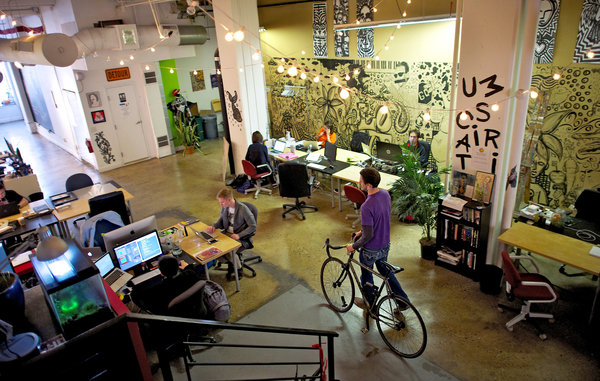
Photograph of Grindspace workspace courtesy of NY Times

I’ve been reading a fascinating article in the New York Times by Alex Williams (see link below) on the emergence of a new type of workspace and place to work for individuals who would rather work in a shared environment rather than sit alone at home.  Alex interviewed a number of people who have made the move from the home office to the shared workspace and common features were the desire to escape loneliness, the need for interaction with other people, the desire to share and discuss ideas and to tap into others experience and critical intelligence, and the need to access specialist facilities for creative people.

This new type of space is not like the shared buildings that emerged in inner London in areas like Clerkenwell and other UK and US cities during the 1980’s which, by and large catered for small companies unable to afford traditional commercial office and workspaces. Places like Grind ( www.grindspaces.com ), Indy Hall and Neue-House ( www.neuehouse.com ) – a workspace styled as a form of private members (workers) club, cater not for small companies but individuals with big and creative ideas, people who are looking for collaborators, contacts and access to others networks and little black contact books (the digital variety).

These new spaces do not come cheap and their costs can range from $500 a month for a desk space and access to all of the facilities down to $35 per day subject to availability.


                      Photograph of Indy Hall shared workspace in Philadelphia courtesy of NY Times

The facilities can include desk space, lounges for meetings, specialist screening rooms for media types to showcase their visual and digital arts and products, kitchens, cafeteria spaces, recording studios and shared libraries.They will not be everyone’s choice but they do offer an alternative to being home alone and the small firm’s workspace. In some ways they are a variant on the US business cubicle for individual workers but with less of the divider walls and more shared spaces. They are not quite as deliberately designed as the modern offices of a Google or a Facebook. They are a lot less regimented with a lot more informality.They appear to already be attracting a market and they could be a way of bringing older, unused or under-utilised buildings back into more productive uses as a new place in the landscape, particularly in city centres and, who knows, in town centres with vacant retail premises. We shall see.


Thursday, 21 March 2013

"People, place and value: the golden triangle" - A Glasshouse and Academy of Urbanism Debate


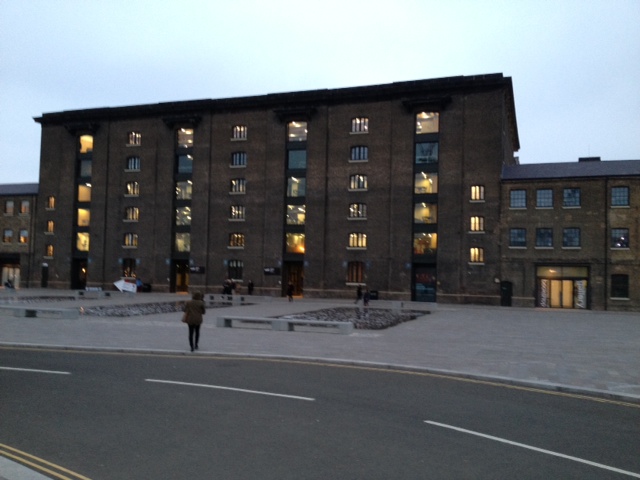
Last night I was privledged to attend the fourth in a series of debates held around the Uk organised by Glasshouse and the Academy of Urbanism (AoU) at the new Central St Martin's College in the Granary Building in the Argent development at Kings X in central London. The subject was "People, place and value: the golden triangle? The panel consisted of Kevin Murray, director of Kevin Murray Associates and current president of the AoU, Cllr Josef Ransley Chair of Kidford Parish Neighbourhood Plan, Pam Alexander non-executive director at Crest Nicholson and Sophia de Sousa Chief Executive of Glasshouse. The panel was chaired by Tom Dyckhoff, writer and broadcaster.

This was the fourth of a series of debates held at various venues around the UK, all with a common aim of getting people talking about placemaking and exploring the changing relationship between people, place and value.

In opening the debate Tom Dyckhoff suggested that we were at a moment of great opportunity to change the way people get involved in placemaking, how they operated, communicated with each other and worked with each other - politicians, built environment professionals and the people who live in the communities that they work in. The economic downturn had raised fundamental questions about the need for  better ways of designing spaces and places.

Kevin Murray spoke first about how great places create different kinds of value for local people - not just hard monetary value - such as new sources of revenue for community development,  but also softer value - such as amenity, culture, beauty, jobs and recreation facilities, and he emphasised that to be successful new places need long term income streams. Great places are those which are viable and enable a quality of life. Kevin argued that that a key element of successful place identity and value is the creation of positive social and community cohesion that lasts for generations, giving them an ability to cope with change over time. This is not just about the design of buildings and the spaces in between; it is about legitimate and meaningful community involvement in the placemaking process, in a purposeful dialogue with environmental professionals and local authorities, where the community is an equal if not primary partner, where local authorities adopt an enabling role rather than being  prescriptive, where the professionals engage with the community and each other in a clear and common language and become far better listeners.

Josef Ransley spoke about the need to understand the different ways in which people in communities think about place in different ways and their different definition of place, which are determined by their interests and anxieties, their access to transport, and their mixed knowledge of formal processes and practices of placemaking, and the confusion they experience with much of the formal and professional language of many placemaking professionals. Josef believes that local authority leaders should be facilitators of discussions on proposals for places rather than determining solutions; that it is impossible for planners to define what is good for people; that placemaking needs to be highly interactive and participative; and that the new proposals for and interest in "localism" offers the opportunity for community participation in creating places that will work. He argued that value needs to be redefined and that there needs to be a move a way from process driven targets (for new housing numbers for example) and a new focus on the qualitative aspects of place and design. He concluded his remarks by stating that the new challenge at the local level is to make the new Panels - a mixture of lay local people and environmental professionals - work in a creative, meaningful way by fusing the skills and knowledge of local people with those of the professionals to define and agree on what the community needs, what will be good for it and effective and lasting ways of delivering it.

Pam Alexander opened by stating what many in the audience knew to be obvious - that involving local people in the design and development of placemaking proposals is good business sense. She rightly believes that the community brings value in its ideas, in its knowledge and has an important role to play in the provision of market research and market testing of development proposals. Community involvement is, she argued, critical to the long term success of placemaking. More sharply she observed that we must stop regarding respect for the community as a weakness.She shared a great story about a comment from a construction industry worker at the previous Liverpool debate who had said that if you want successful places you need to build as though you were doing so for the people that you love - your family and loved ones. She also remarked that we need to engage the powerful - the leaders of the corporate world, in the process of placemaking, in the creation of socially positive legacies and not just focus on the success of their enterprises; the success of the communities that they draw their workers from should be just as important to them and they have a role in making them successful.

Sophia de Sousa opened with her call to arms, one that I am wholly at one with - that place matters! To illustrate this salvo she told the story of the remarks of a participant in the Glasgow debate who pointed out that the poor quality of the place he lived in meant that life expectancy was noticeably lower than in other parts of the city. She also reminded the audience of how poor the commonplace image of property developers is, instanced by how they are usually portrayed in television dramas as grasping and without principle or scruple, interested only in a quick profit. No wonder many in communities don't trust them.And she reminded us not to underestimate the power of local people to positively and creatively affect places and proposals for their improvement and asked us all to think about one thing that we, as individuals, can do to bring about change in the way we make places. In my case its to
recognise the worth and added value of time spent in dialogue with a community throughout the placemaking process and to positively challenge developers and local authorities who doubt this.

It was no surprise that a very lively debate ensued with lots of examples of challenges, projects, successes and new ways of working being shared. Here is a small sample and flavour:

  • The worth and power of bringing planners, developers and communities together and challenging them to find better ways of working together.
  • The attractions and benefits of using Community Land Trusts as a vehicle for place making.
  • The need to plan for desired benefits rather than hoping they will materialise.
  • The need for developers to retain an interest in their developments for longer periods of time in order to ensure a lasting positive legacy.
  • The need for a simpler, clearer shared language to conduct the discourse on placemaking.
  • Environmental professionals need to rediscover the skill of positive listening and stop preaching to lay men and women.
  • The need to create space for these conversations in the Neighbourhood Planning process.
  • But let's not beat up on Local Authorities - they have a difficult role to play and if we want them to behave in a different way we need to be in dialogue with them.
  • And let's recognise the dangers of the proposed bedroom tax - it could lead to a loss of social housing.
  • This is not just about the creation of better places to live in the form of well designed housing, its as much about the creation of lasting cohesive social networks and strong communities.
Tom conclude the debate by remarking that we know what makes a good place and we know how to make them work but we need to share this knowledge with and among local communities and involve them actively in the process.


In conclusion I left St Martin's feeling that this debate on placemaking and the central and vital role of local people within it needs a wider platform so that many more people in the built environment professions can engage with it, participate in it, change their behaviours and the need for serious communication to local authorities and the development community so that they can understand that existing and tired models of public engagement no longer work and are still resulting in places that do not work. There was plenty of proof in the debate, as if it was needed, that serious and meaningful consultation with local people results in places that work, places that are valued by people and which are profitable for developers.

Note: I am wholly responsible for any misinterpretations of speakers and participants remarks in this debate.

Tuesday, 5 March 2013

The Importance of Quality Space to Place


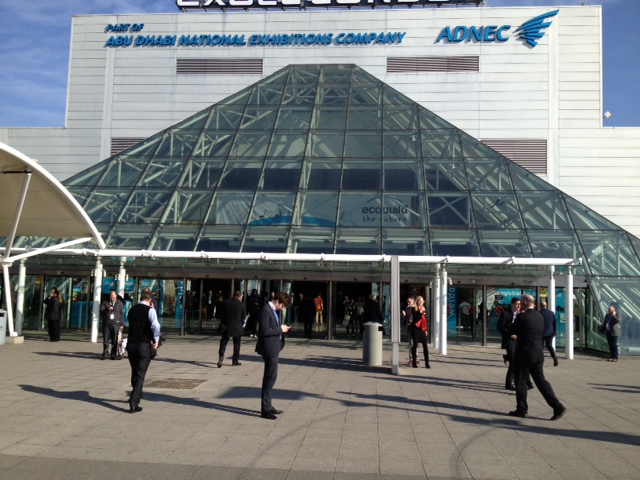
Today I was privileged to be part of a line-up put together by Mike Roberts of HAB (Happiness, Architecture, Beauty) Housing for a session in the Green Building Council's tent at EcoBuild in London's Excel exhibition centre in Docklands. The subject under discussion was the importance of place to residential development and my personal take was on the importance of space to place.

Place matters to me and I think that it matters to all of us and that's why I called my company "Placematters". For me one of the key determinants of place is space and by space I do not limit the word to open space. It covers the spaces we live in and how well they are designed, the spaces we pass through to get to where we live – the lobbies and stair wells, the entrance spaces to buildings, the spaces between buildings, the spaces on top of buildings, the private spaces associated with our houses and apartments, and the shared spaces in the heart of housing developments, whether they be public or like the private (residents only) Victorian squares in central and inner west London.

And for me all of those spaces need to be actively and well managed by a landlord if my flat or house is being rented, one that is committed to the community that they are housing, not managed as an afterthought or, even worse, managed by benign neglect. And managed in partnership with the tenants - not against their wishes. The whole feel of the space needs to be one that I am comfortable with in all its living elements.

In this context one of the purposes of my presentation was to highlight the work of a new organisation in the UK housing field - UK Regeneration, a company that is pioneering a new approach to the provision of high quality housing for rent.

My vehicle for doing so was an improvisation, sharing a story with my audience about a future visit to the first of UKR's new developments in the Sandfields area of Nottingham, a city in the English East Midlands.Here it is:

"So come with me to visit a very special place, one that’s very dear to my heart as its been designed to be my kind of place, a place that I would be happy to rent if I lived and worked in this city.

It’s a place that I wish had existed when I first came to work in London after I had graduated and had to suffer, for too many years, the vagaries of private renting, always putting up with something that was not quite right, something poorly maintained, something too expensive for what it was worth, and sharing a space that was never designed for sharing and so poorly equipped I had to furnish the furnished space myself, …and that in the days before Ikea!; I had to depend on “Trendy Styles” secondhand furniture shop on Kingsland High Road. Sustainable it was not! And cheap it was not…being full of copycat Terence Conran designs.

But enough of the nightmares of private renting thirty years ago…..come with me into the heart of England to a new place - housing with space that’s my kind of place and imagine me as a young recent graduate (yes I know it’s hard looking at me now) with a decent job, fed up with the indignities of student living, and wanting somewhere decent to live and hang out.
Let me first park the car (a hybrid I hope you note) and we can get out and take a shufftie at the place.


The Lenton Area of Nottingham

That’s it over there on the other side of Lenton Boulevard, at the cross roads. Looks interesting don’t you think, modern design with clues in the brickwork about the traditional architectural vernacular of the area, and clearly committed to sustainability if those rooftop panels are anything to go by.

You know for me any residential development that’s going to capture my heart, to be my kind of place, has to be a space that I want to spend time in, has to look good, to look well designed, to have design features that interest and intrigue, with buildings that frame spaces for private contemplation, that offer spaces to meet and greet, to encounter strangers, to party and celebrate, for kids to play and people to catch up on the local gossip.

It’ may sound strange but I want to feel proud of the place where I live, not in a show-off way, but in a way that says this is a sensible place to be for my circumstances and a place that just right for my lifestyle at this time of my life. A place that gives me both privacy and a shared life with mates and family.

In short, I like my living space to be a mix of the private and the public, to be contemplative and to be animated, to be quiet in part and to be active outside, to provide opportunities for encounters, with neighbours and people passing by and through.

But before we look at the shared public space let’s pop in here to this two person flat to see what’s on offer.  Because this place is designed for private renting, for the younger sharing market, it’s got two bedrooms, each with its own bath/shower/toilet space and space in the bedroom for a sofa and table for private entertaining. That alleviates any problems with sharing with someone whose personal hygiene habits might be, well…. uncivilised. 

And here is the shared living space which is fully wired for the “Generation Now” lifestyle providing opportunities to share and stream music and video to every room, always-on high capacity broadband. 

And just look at the kitchen – a bit upmarket from Wickes but with enough design features to look like a Sunday supplement advert; I can almost taste the Jamie Oliver 120 minute meals that will be created here.

This is no accident of design; the developers UKR, who are also the landlords and managers, are in it for the long haul, and have really learned about and understand the lifestyles of their target tenant group and their requirements in terms of the design of their personal, intimate and shared apartment space, and what they need by way of associated external space and associated facilities.

I also want convenience in my place so that I do not have to schlepp all the way in to the Victoria Centre in the middle of town for my provisions or to the large Tesco out by the University. I like my place of life to help meet my needs – for convenience foods when I run out of tea, Pringles or Sauvignon, or toothpaste and mouthwash, for medicines to deal with my lifestyle (hangovers, moi?); so look here, around the central space, are a convenience store, a dry cleaners, a chemists, a doctors surgery and a great little independent caff – where Cuban Coffee meets the Bacon Bap with great “me-duck” service" in the fine traditions of the local Goose Fair.


If you want to know more about this most innovative and ground breaking of UK housing developers contact Jackie Sadek on jackie.sadek@ukregeneration.org.uk